BOXhaul
  • BOXhaul Dump Box
  • Accessories
    • Cart
    • Chain Door
    • Hinge Pin Door
    • Fork Pockets
    • Mesh Cover
    • Replacement Parts
  • Industries
    • Construction
    • Roofing
    • Demolition
    • Crane Rental
  • About
    • Partners
    • Areas We Serve
    • Careers
    • Blog
    • Specifications
  • Contact Us
  • Menu Menu

How to Plan Construction Debris Removal Before a Big Project Starts

Too often, debris management is treated as something to “figure out later.” But on large commercial projects, that approach leads to wasted crane time and unnecessary risk. Smart contractors know that construction debris removal involves planning how materials move from elevated work areas to the ground safely, efficiently, and without slowing the job down. When debris strategy is built into pre-construction, the entire project runs smoother from start to finish.

Why Construction Debris Removal Should Be Planned Before Mobilization

Every major commercial project involves significant material movement. Demolition waste, packaging,, and excess materials all need to be removed consistently and safely. If construction debris removal is not mapped out during pre-construction, crews are forced to improvise.

That improvisation almost always leads to inefficiency; it disrupts sequencing, impacts crane scheduling, and introduces unnecessary safety hazards. Planning ahead allows contractors to align debris logistics with crane picks, staging areas, and workforce allocation.

Impact on Project Timelines

Time is one of the most expensive resources on any jobsite. Delays caused by clogged chutes, overfilled dumpsters, or manual debris handling can slow progress across multiple trades. When construction debris removal is coordinated from the start, debris movement becomes part of the production flow rather than an interruption to it.

By identifying removal methods early, teams can schedule debris lifts alongside material deliveries. This reduces downtime and ensures the jobsite remains organized and accessible.

Crane Scheduling and Equipment Allocation

Crane time is rarely cheap, and it is almost always limited. Without a clear construction debris removal plan, crews may find themselves requesting additional lifts or holding equipment longer than expected. This strains budgets and creates scheduling conflicts with other tasks.

When debris handling is factored into lift planning, contractors can maximize each crane cycle. Efficient removal systems, such as a crane dump box, allow debris to be cleared in bulk without repeated rigging or manual unloading.

Labor Productivity and Workflow Efficiency

Labor inefficiency is another hidden consequence of poor debris planning. If crews must stop productive work to move debris manually, productivity drops quickly. Over time, that lost efficiency compounds into real cost overruns.

A structured construction debris removal strategy ensures that debris flows off the roof or elevated surface with minimal crew intervention. That keeps skilled workers focused on installation, not cleanup logistics.

The Hidden Costs of Poor Construction Debris Removal Planning

When debris strategy is overlooked, the impact goes beyond inconvenience. The financial consequences can quietly erode profit margins. Contractors often underestimate how much poor construction debris removal affects the overall budget.

Consider the ripple effects:

  • Extended crane rentals: Inefficient debris handling can require additional lift time, increasing equipment costs.
  • Increased labor hours: Manual loading, rehandling, and staging waste consume valuable crew time.
  • Jobsite congestion: Poorly managed commercial construction debris creates clutter that slows movement and coordination.
  • Higher injury risk: Trips, falls, and struck-by hazards increase when debris accumulates.
  • Delayed inspections or closeout: Inadequate construction clean up can stall final walkthroughs.

Each of these issues stems from the same root problem of treating debris removal as an afterthought instead of a strategic component of pre-construction planning.

Understanding Your Debris Profile Before the Project Begins

Effective construction debris removal starts with understanding what types of materials will be produced and in what volume.

For roofing projects, debris may include shingles, insulation, ballast, membrane, and fasteners. On demolition-heavy projects, concrete, metal framing, and structural materials may dominate. New construction sites generate packaging, pallets, scrap materials, and cut-offs.

Identifying these materials early helps determine whether standard construction debris removal services are sufficient or if specialized equipment is required.

It is also important to distinguish between active debris handling during the build and post-construction debris removal at project completion. While final cleanup focuses on preparing the site for turnover, daily debris movement is about maintaining workflow and safety. Both fall under the broader umbrella of construction debris removal, but they require different strategies.

When planning for commercial construction debris, consider load weight, bulk density, and how debris will be transported from elevated surfaces. The more detailed this assessment, the more accurate and cost-effective the solution.

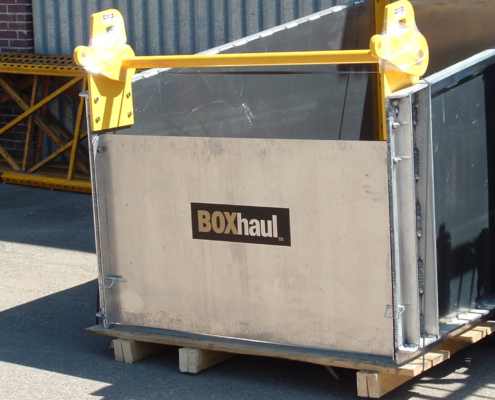
If you’re evaluating equipment options to streamline debris handling on upcoming projects, explore BOXHaul’s construction dump box solutions to see how crane-attached systems simplify high-volume material movement. 

Our Construction Clean Up Solutions

Equipment Matters: Choosing the Right Tools for Construction Debris Removal

The tools you select will determine whether construction debris removal feels like a constant struggle or a seamless part of operations. Traditional methods still dominate many jobsites, but they are not always the most efficient solution.

Traditional Methods: Chutes, Manual Handling, and Dumpsters

Debris chutes can be effective for smaller projects, but they are limited by placement constraints and volume capacity. Dumpsters require constant monitoring and repositioning, particularly on tight urban sites. Manual handling increases fatigue and injury risk.

These methods often require repeated rehandling of materials. Debris is moved from roof to chute, from chute to dumpster, and sometimes from dumpster to haul-off containers. Each touchpoint adds time and labor cost.

Crane-Attached Solutions and the Modern Crane Dump Box

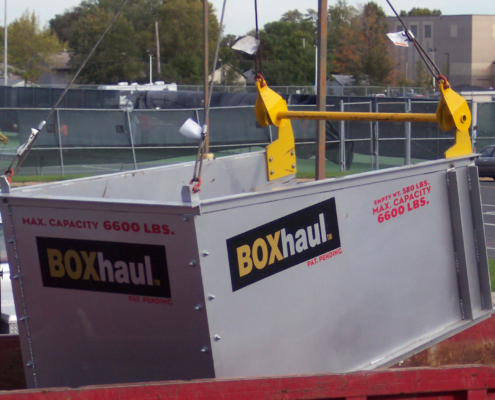
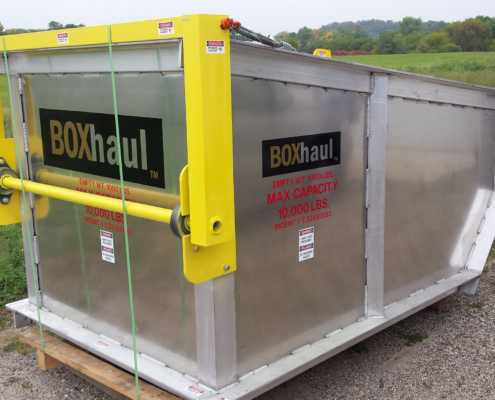
A crane dump box is designed to eliminate many of these inefficiencies. Attached directly to the crane, it allows crews to load debris at elevation and lower it in high-capacity loads. Because it is self-dumping, unloading is quick and controlled.

This approach transforms construction debris removal into a streamlined lift operation. Rather than relying on gravity-fed systems or manual transport, debris is moved in bulk using equipment already present on most large commercial projects.

When a Construction Dump Box Makes the Most Sense

Projects involving significant rooftop tear-offs, large volumes of material, or limited ground access benefit most from a construction dump box system. High-capacity, lightweight designs minimize strain on cranes while maximizing payload.

By incorporating a construction dump box into your debris plan, you reduce handling time and improve jobsite organization. The result is faster cycles, safer conditions, and better cost control.

Safety Considerations in Construction Debris Removal

Safety should be central to any construction debris removal strategy. Accumulated debris creates trip hazards, falling object risks, and unstable walking surfaces. In high-elevation environments, those hazards are magnified.

A proactive debris plan reduces these risks by ensuring materials are removed consistently and predictably. Key safety considerations include:

  • Establishing designated loading zones for debris handling.
  • Coordinating lifts to prevent workers from standing beneath suspended loads.
  • Using high-capacity containers to reduce overfilling.
  • Maintaining clear egress paths at all times.
  • Scheduling routine construction clean up intervals throughout the workday.

When debris removal is structured and equipment-driven rather than improvised, overall site safety improves. Fewer touchpoints mean fewer opportunities for injury.

Building Construction Debris Removal Into Your Pre-Construction Checklist

To make construction debris removal part of your planning process, incorporate it directly into pre-construction meetings and documentation.

  1. Estimate debris volume early: Review plans and scope to calculate expected material waste. This helps determine equipment size and lift frequency.
  2. Coordinate with crane schedules: Align debris lifts with material deliveries. Efficient sequencing prevents unnecessary downtime.
  3. Select the right equipment: Evaluate whether traditional methods or a crane dump box system better supports your project scale and site conditions.
  4. Define responsibility and workflow: Assign clear roles for debris loading, signaling, and ground-level coordination.
  5. Plan for final and post-construction debris removal: Ensure your broader construction debris removal services include both daily material handling and final site readiness.

When debris logistics are documented and communicated before mobilization, crews operate with clarity and consistency.

Plan Smarter Construction Debris Removal Before Your Next Project Starts

Construction debris removal should never be an afterthought. If you’re preparing for a large commercial build or roofing project, consider how modern equipment solutions can improve your approach to construction debris removal.

BOXHaul’s crane-attached dump boxes are engineered to simplify high-capacity material movement, reduce handling time, and enhance safety on demanding jobsites. Reach out today discuss your upcoming project and explore how our smarter debris strategies can support your team from day one.

Share This Post

  • Share on Facebook
  • Share on X
  • Share on WhatsApp
  • Share on Pinterest
  • Share on LinkedIn
  • Share on Tumblr
  • Share on Vk
  • Share on Reddit
  • Share by Mail

More Like This

Excavator loader machine at demolition construction site

Urban Demolition Dumpsters: Managing Debris in “Zero-Lot-Line” Work Zones

Construction Dump Boxes, Demolition Dump Boxes
https://boxhaul.com/wp-content/uploads/2026/07/excavator-loader-machine-at-demolition-construction-site.jpg 1250 2000 Abstrakt Marketing /wp-content/uploads/2023/10/BOXhaul_Logo.png Abstrakt Marketing2026-07-01 09:17:212026-07-01 09:17:25Urban Demolition Dumpsters: Managing Debris in “Zero-Lot-Line” Work Zones
boxhaul dump box on crane hinge

Maximizing Payload: The Impact of Dump Box Weight on Crane and Forklift Capacity

Construction Dump Boxes
https://boxhaul.com/wp-content/uploads/2023/10/BOXHAUL-006.jpg 1250 2000 Abstrakt Marketing /wp-content/uploads/2023/10/BOXhaul_Logo.png Abstrakt Marketing2026-06-29 13:22:412026-06-29 13:22:46Maximizing Payload: The Impact of Dump Box Weight on Crane and Forklift Capacity
Excavator bucket loading debris into a dump truck

Construction Dumpster Rental Alternatives: Custom Dump Boxes

Boxhaul, Construction Dump Boxes
https://boxhaul.com/wp-content/uploads/2026/06/Excavator-bucket-loading-debris-into-a-dump-truck.jpg 1250 2000 Abstrakt Marketing /wp-content/uploads/2023/10/BOXhaul_Logo.png Abstrakt Marketing2026-06-09 08:11:272026-06-09 08:11:34Construction Dumpster Rental Alternatives: Custom Dump Boxes
BoxHaul Dump Box - dump box back

Concrete & Heavy Debris Dump Boxes: What Contractors Need to Know

Construction Dump Boxes
https://boxhaul.com/wp-content/uploads/2026/03/BoxHaul-Dump-Box-dump-box-back.jpg 1250 2000 Abstrakt Marketing /wp-content/uploads/2023/10/BOXhaul_Logo.png Abstrakt Marketing2026-05-18 10:04:192026-05-18 10:04:27Concrete & Heavy Debris Dump Boxes: What Contractors Need to Know

Construction Dumpster Sizes Explained: Choosing the Right Dump Box for Each Phase of a Build

Construction Dump Boxes
https://boxhaul.com/wp-content/uploads/2026/05/Choosing-the-Right-Dump-Box-for-Each-Phase-of-a-Build.jpg 1250 2000 Abstrakt Marketing /wp-content/uploads/2023/10/BOXhaul_Logo.png Abstrakt Marketing2026-05-18 09:26:462026-05-18 09:26:56Construction Dumpster Sizes Explained: Choosing the Right Dump Box for Each Phase of a Build
BoxHaul Dump Box - dump boxes sitting in driveway

How to Scale Dump Box Rentals Across Multiple Construction Sites

Construction Dump Boxes
https://boxhaul.com/wp-content/uploads/2026/03/BoxHaul-Dump-Box-dump-boxes-sitting-in-driveway.jpg 1250 2000 Abstrakt Marketing /wp-content/uploads/2023/10/BOXhaul_Logo.png Abstrakt Marketing2026-05-18 09:20:292026-05-18 09:21:13How to Scale Dump Box Rentals Across Multiple Construction Sites
BoxHaul Dump Box - side view of two dump boxes

From Punch List to Handoff: Cleanup Strategies for Project Closeout

Construction Dump Boxes
https://boxhaul.com/wp-content/uploads/2026/03/BoxHaul-Dump-Box-side-view-of-two-dump-boxes.jpg 1250 2000 Abstrakt Marketing /wp-content/uploads/2023/10/BOXhaul_Logo.png Abstrakt Marketing2026-04-03 18:04:522026-05-17 15:56:02From Punch List to Handoff: Cleanup Strategies for Project Closeout
boxhaul forklift dump box view from below

How Construction Teams Use the BOXhaul On-Site Dumpster to Fill Gaps

Construction Dump Boxes
https://boxhaul.com/wp-content/uploads/2023/10/20230921_104202.jpg 1250 2000 Abstrakt Marketing /wp-content/uploads/2023/10/BOXhaul_Logo.png Abstrakt Marketing2026-04-03 18:01:262026-05-17 15:56:02How Construction Teams Use the BOXhaul On-Site Dumpster to Fill Gaps
boxhaul senior dump box view 2

Why Flexibility Matters in Construction Debris Removal Processes

Construction Dump Boxes
https://boxhaul.com/wp-content/uploads/2023/10/2014-09-23-09.15.19.jpg 1250 2000 Abstrakt Marketing /wp-content/uploads/2023/10/BOXhaul_Logo.png Abstrakt Marketing2026-04-03 17:57:242026-05-17 15:56:02Why Flexibility Matters in Construction Debris Removal Processes
Previous Previous Previous Next Next Next

Categories

  • Attachments
  • Boxhaul
  • Construction Dump Boxes
  • Construction Logistics
  • Construction Site Operations
  • Construction Waste Management
  • Debris Dump Box
  • Demolition Dump Boxes
  • Dump Box Safety
  • Equipment Maintenance
  • Equipment Use
  • Material Handling
  • Roofing
  • Safety
  • Self Dumper Boxes
  • Site Operations
  • Uncategorized

Contact Us

"*" indicates required fields

This field is for validation purposes and should be left unchanged.

About Us

BOXhaul’s one-of-a-kind dump boxes are revolutionizing how commercial construction gets done.

What We Do

The BOXhaul Dump Box

BOXhaul Accessories 

Industries We Serve

About Us

Contact Us

9363 67th Street NW, Annandale, MN 55302

(612) 702-5392

sales@boxhaul.com

Website by Abstrakt Marketing Group ©
  • Privacy Policy
  • Sitemap
  • Linkedin
  • Facebook
Scroll to top Scroll to top Scroll to top

This site uses cookies. By continuing to browse the site, you are agreeing to our use of cookies.

AcceptLearn more

Cookie and Privacy Settings


How we use cookies

We may request cookies to be set on your device. We use cookies to let us know when you visit our websites, how you interact with us, to enrich your user experience, and to customize your relationship with our website.

Click on the different category headings to find out more. You can also change some of your preferences. Note that blocking some types of cookies may impact your experience on our websites and the services we are able to offer.

Essential Website Cookies

These cookies are strictly necessary to provide you with services available through our website and to use some of its features.

Because these cookies are strictly necessary to deliver the website, refusing them will have impact how our site functions. You always can block or delete cookies by changing your browser settings and force blocking all cookies on this website. But this will always prompt you to accept/refuse cookies when revisiting our site.

We fully respect if you want to refuse cookies but to avoid asking you again and again kindly allow us to store a cookie for that. You are free to opt out any time or opt in for other cookies to get a better experience. If you refuse cookies we will remove all set cookies in our domain.

We provide you with a list of stored cookies on your computer in our domain so you can check what we stored. Due to security reasons we are not able to show or modify cookies from other domains. You can check these in your browser security settings.

Other external services

We also use different external services like Google Webfonts, Google Maps, and external Video providers. Since these providers may collect personal data like your IP address we allow you to block them here. Please be aware that this might heavily reduce the functionality and appearance of our site. Changes will take effect once you reload the page.

Google Webfont Settings:

Google Map Settings:

Google reCaptcha Settings:

Vimeo and Youtube video embeds:

Accept settingsHide notification only