BOXhaul
  • BOXhaul Dump Box
  • Accessories
    • Cart
    • Chain Door
    • Hinge Pin Door
    • Fork Pockets
    • Mesh Cover
    • Replacement Parts
  • Industries
    • Construction
    • Roofing
    • Demolition
    • Crane Rental
  • About
    • Partners
    • Areas We Serve
    • Careers
    • Blog
    • Specifications
  • Contact Us
  • Menu Menu

The Costs of Manual Construction Waste Disposal

Construction waste disposal is often treated as a background task. Debris gets cleared, dumpsters get filled, and work continues. But while waste removal may seem straightforward, the methods used to handle it can drive up costs in ways that don’t show up on invoices.

Outdated cleanup practices affect more than site cleanliness. They influence labor efficiency, safety exposure, workflow consistency, and schedule reliability. For contractors working with tighter crews, tighter budgets, and higher expectations, these hidden costs add up quickly.

This article takes a closer look at where those costs come from and why many construction teams are rethinking how they approach construction waste removal.

What Manual Construction Waste Removal Looks Like on Today’s Jobsites

On many projects, construction waste removal still relies on familiar methods. These approaches are common, widely accepted, and often viewed as “good enough.”

Typical manual waste handling includes:

  • Hand hauling debris from work areas
  • Wheelbarrows, carts, or bins pushed across the site
  • Skid steers or loaders used intermittently for cleanup
  • A centrally located construction waste dumpster that crews return to throughout the day

These methods work, but they’re labor-intensive and heavily dependent on worker time and coordination. As projects become more complex and crews become leaner, the limitations of manual construction waste disposal become more apparent.

Where Hidden Costs Come From

The true cost of manual construction waste removal comes from the cumulative impact of inefficiency across daily operations.

Lost Labor Time

Every minute a skilled worker spends hauling debris is time not spent on installation, assembly, or finishing work. Cleanup tasks are often spread throughout the day, pulling workers away from productive activities in short bursts that are difficult to track.

Workflow Disruptions

When debris builds up, work slows down. Crews either stop to clear waste or work around it. Both options reduce productivity. Cleanup becomes reactive instead of planned, breaking momentum and causing stop-and-start workflows that ripple through the schedule.

Safety and Risk Exposure

Manual handling increases exposure to strains, overexertion injuries, and contact with sharp or unstable materials. Debris left in walkways or staging areas creates trip hazards and complicates compliance with jobsite safety standards.

Equipment Inefficiency

Using production equipment for cleanup creates conflicts. Skid steers and loaders pulled into waste handling aren’t available for material placement or grading tasks. Operators are reassigned, schedules shift, and productivity suffers.

Schedule Impact

Small cleanup delays often seem insignificant on their own. But when debris handling slows work repeatedly, those delays compound. Missed milestones, rushed finishes, and extended timelines become more likely when waste removal isn’t efficient.

Why Dumpster-Only Waste Handling Often Falls Short

Dumpsters remain a common solution for construction waste disposal, and they do provide volume capacity. However, relying solely on a dumpster introduces its own challenges.

Dumpsters are stationary by design. They’re typically placed where access allows, not where waste is generated. This means crews walk farther with debris, increasing time and fatigue. When dumpsters fill up, work can stall while waiting for swaps or pickups.

Reframing the Real Question

Contractors often ask how to get rid of construction waste in the simplest way possible. A more useful question is how to remove waste without slowing crews down or disrupting daily operations.

Efficiency in construction waste disposal isn’t just about capacity. It’s about:

  • How close waste handling is to active work zones
  • How much labor is required to move debris
  • How predictable and repeatable the process is

When waste removal integrates smoothly into workflows, productivity improves across the site.

Modern Alternatives to Manual Construction Waste Removal

In response to labor constraints and tighter schedules, many teams are adopting more modern approaches to construction waste removal. These solutions focus on reducing manual handling and aligning cleanup with how jobsites actually function.

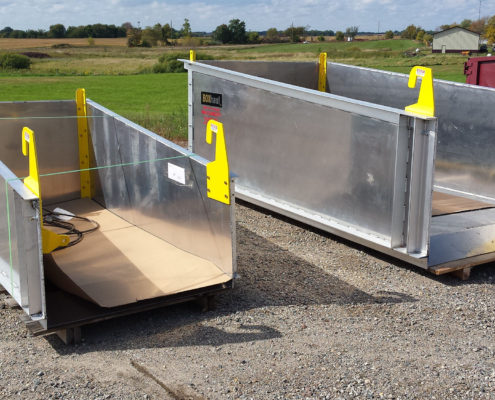
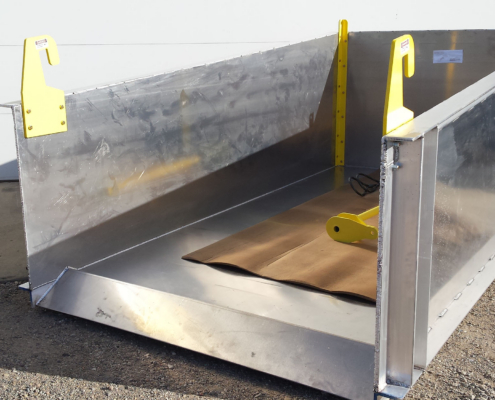
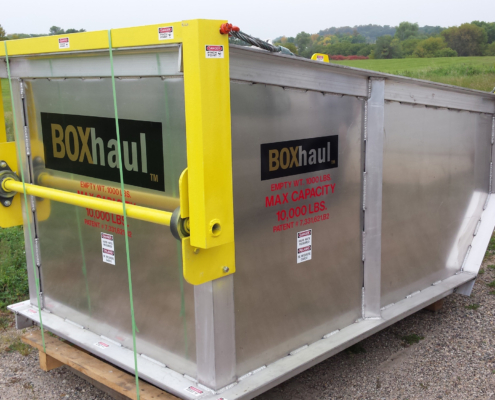
Containerized, mechanized options allow debris to be collected closer to the source and moved using equipment already present on site. Self-dumping boxes are one example of this shift. By allowing debris to be lifted and dumped mechanically, they reduce reliance on hand hauling and repeated trips.

The key benefit of modern alternatives isn’t technology for its own sake. It’s consistency. Waste removal becomes a predictable part of the workflow rather than a recurring interruption.

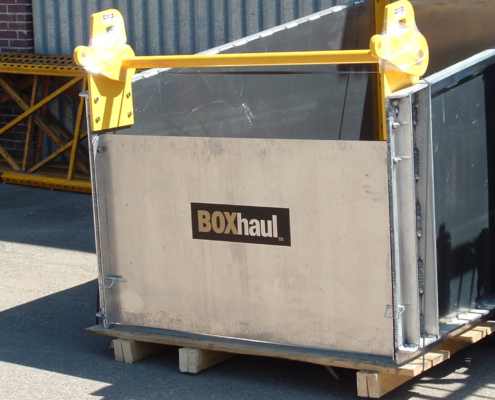
Looking for a more efficient way to handle jobsite waste? Explore the BOXhaul dump box to learn more about what modern debris handling can look like.

Explore the BOXhaul

Why Manual Waste Removal Doesn’t Scale Well

Manual construction waste removal may work on small or short-duration projects. But as jobsite demands increase, its limitations become harder to manage.

Smaller crews mean fewer people available for non-productive tasks. Faster schedules leave less room for delays. Higher safety expectations reduce tolerance for cluttered or congested work areas.

Under these conditions, manual methods require more oversight, more coordination, and more labor than many projects can afford. What once felt manageable becomes a consistent source of friction.

Evaluating Your Construction Waste Disposal Strategy

The hidden costs of manual construction waste disposal aren’t always obvious, but they’re real. Labor inefficiency, workflow disruptions, safety risks, and schedule impacts all stem from how debris is handled day to day.

Taking time to evaluate construction waste removal practices can reveal opportunities to:

  • Reduce labor hours spent on cleanup
  • Improve jobsite organization and safety
  • Keep crews focused on productive work
  • Support more reliable schedules

Construction waste management doesn’t need to be a bottleneck. With the right approach, it can support smoother operations instead of slowing them down.

Ready to Rethink Construction Waste Disposal?

If your crews are spending too much time hauling debris or working around waste, it may be time to reassess your construction waste disposal strategy. Modern solutions can help reduce labor demands, improve site safety, and keep projects moving without disruption.

Reach out to the BOXhaul team to learn more about equipment designed to support efficient construction waste removal on today’s jobsites.

Share This Post

  • Share on Facebook
  • Share on X
  • Share on WhatsApp
  • Share on Pinterest
  • Share on LinkedIn
  • Share on Tumblr
  • Share on Vk
  • Share on Reddit
  • Share by Mail

More Like This

Engineer architect and worker operation control demolish old building

Why Concrete Disposal Cost Is One of the Most Expensive Construction Site Problems

Boxhaul, Debris Dump Box
https://boxhaul.com/wp-content/uploads/2026/06/Engineer-architect-and-worker-operation-control-demolish-old-building.jpg 1250 2000 Abstrakt Marketing /wp-content/uploads/2023/10/BOXhaul_Logo.png Abstrakt Marketing2026-06-12 09:00:002026-06-09 08:00:55Why Concrete Disposal Cost Is One of the Most Expensive Construction Site Problems
aged and worn vintage photo of concrete rubble

Concrete vs. Mixed Debris: Does Material Type Affect Which Dump Box You Need?

Boxhaul, Debris Dump Box
https://boxhaul.com/wp-content/uploads/2026/06/aged-and-worn-vintage-photo-of-concrete-rubble.jpg 1250 2000 Abstrakt Marketing /wp-content/uploads/2023/10/BOXhaul_Logo.png Abstrakt Marketing2026-06-11 09:00:002026-06-09 08:00:42Concrete vs. Mixed Debris: Does Material Type Affect Which Dump Box You Need?
New residential construction home framing against a blue sky

Why Loose Framing Waste Is One of the Biggest Jobsite Safety Hazards

Boxhaul, Debris Dump Box
https://boxhaul.com/wp-content/uploads/2026/06/New-residential-construction-home-framing-against-a-blue-sky.jpg 1250 2000 Abstrakt Marketing /wp-content/uploads/2023/10/BOXhaul_Logo.png Abstrakt Marketing2026-06-10 09:00:002026-06-09 08:00:31Why Loose Framing Waste Is One of the Biggest Jobsite Safety Hazards
Excavator bucket loading debris into a dump truck

Construction Dumpster Rental Alternatives: Custom Dump Boxes

Boxhaul, Construction Dump Boxes
https://boxhaul.com/wp-content/uploads/2026/06/Excavator-bucket-loading-debris-into-a-dump-truck.jpg 1250 2000 Abstrakt Marketing /wp-content/uploads/2023/10/BOXhaul_Logo.png Abstrakt Marketing2026-06-09 08:11:272026-06-09 08:11:34Construction Dumpster Rental Alternatives: Custom Dump Boxes
from behind view of the boxhaul dump box with wire clamps attachment

The Top Dump Box Rental Mistakes Contractors Make

Boxhaul
https://boxhaul.com/wp-content/uploads/2023/10/2014-09-19-14.26.32.jpg 1250 2000 Abstrakt Marketing /wp-content/uploads/2023/10/BOXhaul_Logo.png Abstrakt Marketing2026-03-23 16:59:292026-05-17 15:56:03The Top Dump Box Rental Mistakes Contractors Make
boxhaul dump box on crane hinge far view

How Self-Dumping Boxes Reduce Labor Costs on Construction Sites

Boxhaul
https://boxhaul.com/wp-content/uploads/2023/10/BOXHAUL-029.jpg 1250 2000 Abstrakt Marketing /wp-content/uploads/2023/10/BOXhaul_Logo.png Abstrakt Marketing2026-01-26 14:19:172026-05-17 15:56:03How Self-Dumping Boxes Reduce Labor Costs on Construction Sites
boxhaul dump box on crane hinge in air view

Crane Skip Containers Vs. The BOXhaul Dump Box

Boxhaul
https://boxhaul.com/wp-content/uploads/2023/10/BOXHAUL-034.jpg 1250 2000 Abstrakt Marketing /wp-content/uploads/2023/10/BOXhaul_Logo.png Abstrakt Marketing2026-01-21 13:51:362026-05-17 15:56:03Crane Skip Containers Vs. The BOXhaul Dump Box
boxhaul dump box being hoisted in air on crane air view

A Guide to Efficient and Effective Dump Box Fleet Integration

Boxhaul
https://boxhaul.com/wp-content/uploads/2023/10/A0467_BOXHAUL_120_OLV_SEPT19_LOGO.00_01_24_18.Still007.jpg 1250 2000 Abstrakt Marketing /wp-content/uploads/2023/10/BOXhaul_Logo.png Abstrakt Marketing2025-06-11 14:14:212026-05-17 15:56:07A Guide to Efficient and Effective Dump Box Fleet Integration
boxhaul dump box on crane hinge far view

Common Mistakes When Buying Self-Dumper Boxes: How to Avoid Costly Errors

Boxhaul, Self Dumper Boxes
https://boxhaul.com/wp-content/uploads/2023/10/BOXHAUL-029.jpg 1250 2000 Abstrakt Marketing /wp-content/uploads/2023/10/BOXhaul_Logo.png Abstrakt Marketing2025-01-22 16:09:182026-05-17 15:56:10Common Mistakes When Buying Self-Dumper Boxes: How to Avoid Costly Errors
Previous Previous Previous Next Next Next

Categories

  • Attachments
  • Boxhaul
  • Construction Dump Boxes
  • Construction Logistics
  • Construction Site Operations
  • Construction Waste Management
  • Debris Dump Box
  • Demolition Dump Boxes
  • Dump Box Safety
  • Equipment Maintenance
  • Equipment Use
  • Material Handling
  • Roofing
  • Safety
  • Self Dumper Boxes
  • Site Operations
  • Uncategorized

Contact Us

"*" indicates required fields

This field is for validation purposes and should be left unchanged.

About Us

BOXhaul’s one-of-a-kind dump boxes are revolutionizing how commercial construction gets done.

What We Do

The BOXhaul Dump Box

BOXhaul Accessories 

Industries We Serve

About Us

Contact Us

9363 67th Street NW, Annandale, MN 55302

(612) 702-5392

sales@boxhaul.com

Website by Abstrakt Marketing Group ©
  • Privacy Policy
  • Sitemap
  • Linkedin
  • Facebook
Scroll to top Scroll to top Scroll to top

This site uses cookies. By continuing to browse the site, you are agreeing to our use of cookies.

AcceptLearn more

Cookie and Privacy Settings


How we use cookies

We may request cookies to be set on your device. We use cookies to let us know when you visit our websites, how you interact with us, to enrich your user experience, and to customize your relationship with our website.

Click on the different category headings to find out more. You can also change some of your preferences. Note that blocking some types of cookies may impact your experience on our websites and the services we are able to offer.

Essential Website Cookies

These cookies are strictly necessary to provide you with services available through our website and to use some of its features.

Because these cookies are strictly necessary to deliver the website, refusing them will have impact how our site functions. You always can block or delete cookies by changing your browser settings and force blocking all cookies on this website. But this will always prompt you to accept/refuse cookies when revisiting our site.

We fully respect if you want to refuse cookies but to avoid asking you again and again kindly allow us to store a cookie for that. You are free to opt out any time or opt in for other cookies to get a better experience. If you refuse cookies we will remove all set cookies in our domain.

We provide you with a list of stored cookies on your computer in our domain so you can check what we stored. Due to security reasons we are not able to show or modify cookies from other domains. You can check these in your browser security settings.

Other external services

We also use different external services like Google Webfonts, Google Maps, and external Video providers. Since these providers may collect personal data like your IP address we allow you to block them here. Please be aware that this might heavily reduce the functionality and appearance of our site. Changes will take effect once you reload the page.

Google Webfont Settings:

Google Map Settings:

Google reCaptcha Settings:

Vimeo and Youtube video embeds:

Accept settingsHide notification only