BOXhaul
  • BOXhaul Dump Box
  • Accessories
    • Cart
    • Chain Door
    • Hinge Pin Door
    • Fork Pockets
    • Mesh Cover
    • Replacement Parts
  • Industries
    • Construction
    • Roofing
    • Demolition
    • Crane Rental
  • About
    • Partners
    • Areas We Serve
    • Careers
    • Blog
    • Specifications
  • Contact Us
  • Menu Menu

Choosing the Right Self-Dumper Box

Selecting the right self-dumping box can make a noticeable difference in how efficiently a jobsite runs. From daily cleanup to heavy debris removal, the size and capacity of your dump box affect labor hours, safety, equipment strain, and overall project flow.

When the box is too small, crews waste time making extra trips. When it’s too large, there’s a risk of overloading, equipment stress, or unnecessary cost. This guide walks through the key factors contractors and project managers should consider when choosing a self-dumping dump box that fits their job, materials, and crew size.

Understanding Standard Self-Dumping Box Sizes and Capacities

Most self-dumping boxes fall into three general size categories. While exact dimensions and ratings vary by manufacturer, these ranges cover the majority of construction applications.

Small Self-Dumping Boxes

  • Lower overall weight
  • Reduced load capacity
  • Easier to maneuver in tight areas

These boxes are commonly used for interior renovations, light cleanup, or sites with limited access. They’re a good fit when debris volume is low and material weight is manageable.

Mid-Size Self-Dumping Boxes

  • Balanced weight and capacity
  • Suitable for mixed debris
  • Common on commercial jobsites

Mid-size boxes are often the most versatile option. They handle a wide range of materials without becoming difficult to lift or position.

Large Self-Dumping Boxes

  • Higher weight ratings
  • Designed for dense or high-volume debris
  • Built for demanding conditions

Large boxes are typically used on demolition, concrete, or industrial projects where debris is heavy and continuous.

Understanding where your project falls within these categories helps narrow down the right starting point.

Matching Dump Box Size to Job Type

Different types of work generate different debris streams. Choosing the right self-dumping box starts with knowing what you’re hauling.

Roofing Projects

Roofing debris is often bulky rather than dense. Shingles, underlayment, and insulation take up space quickly but don’t always reach high weight limits. A mid-size box usually provides enough volume without risking overload.

Best fit: Mid-size self-dumping box.

Demolition Work

Demolition debris is unpredictable and heavy. Brick, plaster, framing, concrete chunks, and metal can all end up in the same container. Boxes used for demolition waste management need higher load ratings and reinforced construction.

Best fit: Large self-dumping box.

Concrete and Masonry

Concrete is one of the heaviest materials handled on construction sites. Even small amounts add up fast. Using an oversized container can encourage overloading, which puts stress on lifting equipment.

Best fit: Mid-size box with a conservative loading approach.

General Construction and Finish Work

Framing, drywall, packaging, and trim waste are lighter but constant. Smaller boxes may work for limited crews, while mid-size boxes support faster cleanup on larger sites.

Best fit: Small or mid-size box depending on debris volume and crew size.

Material Weight vs. Volume: Why Both Matter

One of the most common mistakes when choosing a self-dumping dump box is focusing only on volume. A box may look half empty but still be close to its weight limit.

Dense materials to watch closely include:

  • Concrete and masonry
  • Brick and block
  • Roofing tiles
  • Metal scrap

Overloading can lead to:

  • Unsafe lifting conditions
  • Equipment wear or damage
  • Delays caused by rehandling debris

Balancing material weight and volume is critical for safe and efficient construction and demolition waste management. When in doubt, it’s often better to use a slightly smaller box and cycle it more frequently than to push capacity limits.

Do Smaller Crews Need Smaller Dump Boxes?

Not always, but crew size should factor into the decision.

Smaller crews often benefit from:

  • Boxes that are easier to reposition
  • Lower load limits that reduce risk
  • Simpler cleanup routines

Larger crews generate debris faster and may need:

  • Higher capacity boxes
  • Multiple boxes staged in different zones
  • Equipment-assisted dumping to avoid bottlenecks

The goal is to match the box to how fast debris is produced, not just how many workers are on site.

When a Custom-Sized Dump Box Makes Sense

Standard sizes cover most applications, but there are situations where a custom box is worth considering.

Custom configurations can help when:

  • Access points are unusually tight or restricted
  • Debris type is consistently heavier or larger than normal
  • Equipment clearances require specific dimensions

A site follows a repeatable workflow across multiple projects

Custom boxes may cost more upfront, but they can reduce labor hours, prevent safety issues, and improve long-term efficiency on recurring job types.

Common Questions Contractors Ask

What dump box sizes are available?

Most manufacturers offer small, mid-size, and large self-dumping boxes, with custom options available for specialized needs.

What size dump box do I need for concrete vs. general debris?

Concrete usually works best in a mid-size box to avoid overloading. General debris can often be handled by small or mid-size boxes depending on volume.

Can dump boxes handle heavy materials like brick or roofing tiles?

Yes, when the box is rated appropriately and loaded within capacity limits.

Is a custom dump box worth the investment?

For specialized or repeat projects, custom sizing can improve safety and efficiency enough to justify the cost.

Do smaller crews always need smaller boxes?

Not necessarily. The right size depends more on debris volume and handling method than crew count alone.

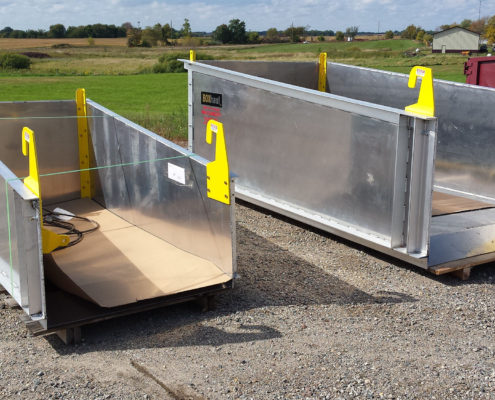
Choosing the Right Box Improves More Than Cleanup

The right self-dumping box doesn’t just hold waste. It helps control workflow, reduce unnecessary labor, and support safer material handling across every phase of a project.

By considering job type, debris density, crew size, and long-term use, contractors can select a dump box that supports efficient construction and demolition waste management without overspending or creating avoidable risk.

Making the right choice upfront keeps cleanup predictable, projects moving, and crews focused on the work that matters most.

Share This Post

  • Share on Facebook
  • Share on X
  • Share on WhatsApp
  • Share on Pinterest
  • Share on LinkedIn
  • Share on Tumblr
  • Share on Vk
  • Share on Reddit
  • Share by Mail

More Like This

Construction concrete debris in metal dumpster close up. Cement scrap in container on construction site

The Cost of Corrosion: Why Steel Dump Boxes Are Leaking Your Profits

Boxhaul
https://boxhaul.com/wp-content/uploads/2026/06/Construction-concrete-debris-in-metal-dumpster-close-up.-Cement-scrap-in-container-on-construction-site.jpg 1250 2000 Abstrakt Marketing /wp-content/uploads/2023/10/BOXhaul_Logo.png Abstrakt Marketing2026-06-23 08:55:302026-06-23 08:55:40The Cost of Corrosion: Why Steel Dump Boxes Are Leaking Your Profits
Engineer architect and worker operation control demolish old building

Why Concrete Disposal Cost Is One of the Most Expensive Construction Site Problems

Boxhaul, Debris Dump Box
https://boxhaul.com/wp-content/uploads/2026/06/Engineer-architect-and-worker-operation-control-demolish-old-building.jpg 1250 2000 Abstrakt Marketing /wp-content/uploads/2023/10/BOXhaul_Logo.png Abstrakt Marketing2026-06-12 09:00:002026-06-09 08:00:55Why Concrete Disposal Cost Is One of the Most Expensive Construction Site Problems
aged and worn vintage photo of concrete rubble

Concrete vs. Mixed Debris: Does Material Type Affect Which Dump Box You Need?

Boxhaul, Debris Dump Box
https://boxhaul.com/wp-content/uploads/2026/06/aged-and-worn-vintage-photo-of-concrete-rubble.jpg 1250 2000 Abstrakt Marketing /wp-content/uploads/2023/10/BOXhaul_Logo.png Abstrakt Marketing2026-06-11 09:00:002026-06-09 08:00:42Concrete vs. Mixed Debris: Does Material Type Affect Which Dump Box You Need?
New residential construction home framing against a blue sky

Why Loose Framing Waste Is One of the Biggest Jobsite Safety Hazards

Boxhaul, Debris Dump Box
https://boxhaul.com/wp-content/uploads/2026/06/New-residential-construction-home-framing-against-a-blue-sky.jpg 1250 2000 Abstrakt Marketing /wp-content/uploads/2023/10/BOXhaul_Logo.png Abstrakt Marketing2026-06-10 09:00:002026-06-09 08:00:31Why Loose Framing Waste Is One of the Biggest Jobsite Safety Hazards
Excavator bucket loading debris into a dump truck

Construction Dumpster Rental Alternatives: Custom Dump Boxes

Boxhaul, Construction Dump Boxes
https://boxhaul.com/wp-content/uploads/2026/06/Excavator-bucket-loading-debris-into-a-dump-truck.jpg 1250 2000 Abstrakt Marketing /wp-content/uploads/2023/10/BOXhaul_Logo.png Abstrakt Marketing2026-06-09 08:11:272026-06-09 08:11:34Construction Dumpster Rental Alternatives: Custom Dump Boxes
from behind view of the boxhaul dump box with wire clamps attachment

The Top Dump Box Rental Mistakes Contractors Make

Boxhaul
https://boxhaul.com/wp-content/uploads/2023/10/2014-09-19-14.26.32.jpg 1250 2000 Abstrakt Marketing /wp-content/uploads/2023/10/BOXhaul_Logo.png Abstrakt Marketing2026-03-23 16:59:292026-05-17 15:56:03The Top Dump Box Rental Mistakes Contractors Make
boxhaul dump box depositing debris into larger dumpster

The Costs of Manual Construction Waste Disposal

Boxhaul
https://boxhaul.com/wp-content/uploads/2023/10/A0467_BOXHAUL_120_OLV_SEPT19_LOGO.00_02_50_07.Still010.jpg 1250 2000 Abstrakt Marketing /wp-content/uploads/2023/10/BOXhaul_Logo.png Abstrakt Marketing2026-01-26 14:23:052026-05-17 15:56:03The Costs of Manual Construction Waste Disposal
boxhaul dump box on crane hinge far view

How Self-Dumping Boxes Reduce Labor Costs on Construction Sites

Boxhaul
https://boxhaul.com/wp-content/uploads/2023/10/BOXHAUL-029.jpg 1250 2000 Abstrakt Marketing /wp-content/uploads/2023/10/BOXhaul_Logo.png Abstrakt Marketing2026-01-26 14:19:172026-05-17 15:56:03How Self-Dumping Boxes Reduce Labor Costs on Construction Sites
boxhaul dump box on crane hinge in air view

Crane Skip Containers Vs. The BOXhaul Dump Box

Boxhaul
https://boxhaul.com/wp-content/uploads/2023/10/BOXHAUL-034.jpg 1250 2000 Abstrakt Marketing /wp-content/uploads/2023/10/BOXhaul_Logo.png Abstrakt Marketing2026-01-21 13:51:362026-05-17 15:56:03Crane Skip Containers Vs. The BOXhaul Dump Box
Previous Previous Previous Next Next Next

Categories

  • Attachments
  • Boxhaul
  • Construction Dump Boxes
  • Construction Logistics
  • Construction Site Operations
  • Construction Waste Management
  • Debris Dump Box
  • Demolition Dump Boxes
  • Dump Box Safety
  • Equipment Maintenance
  • Equipment Use
  • Material Handling
  • Roofing
  • Safety
  • Self Dumper Boxes
  • Site Operations
  • Uncategorized

Contact Us

"*" indicates required fields

This field is for validation purposes and should be left unchanged.

About Us

BOXhaul’s one-of-a-kind dump boxes are revolutionizing how commercial construction gets done.

What We Do

The BOXhaul Dump Box

BOXhaul Accessories 

Industries We Serve

About Us

Contact Us

9363 67th Street NW, Annandale, MN 55302

(612) 702-5392

sales@boxhaul.com

Website by Abstrakt Marketing Group ©
  • Privacy Policy
  • Sitemap
  • Linkedin
  • Facebook
Scroll to top Scroll to top Scroll to top

This site uses cookies. By continuing to browse the site, you are agreeing to our use of cookies.

AcceptLearn more

Cookie and Privacy Settings


How we use cookies

We may request cookies to be set on your device. We use cookies to let us know when you visit our websites, how you interact with us, to enrich your user experience, and to customize your relationship with our website.

Click on the different category headings to find out more. You can also change some of your preferences. Note that blocking some types of cookies may impact your experience on our websites and the services we are able to offer.

Essential Website Cookies

These cookies are strictly necessary to provide you with services available through our website and to use some of its features.

Because these cookies are strictly necessary to deliver the website, refusing them will have impact how our site functions. You always can block or delete cookies by changing your browser settings and force blocking all cookies on this website. But this will always prompt you to accept/refuse cookies when revisiting our site.

We fully respect if you want to refuse cookies but to avoid asking you again and again kindly allow us to store a cookie for that. You are free to opt out any time or opt in for other cookies to get a better experience. If you refuse cookies we will remove all set cookies in our domain.

We provide you with a list of stored cookies on your computer in our domain so you can check what we stored. Due to security reasons we are not able to show or modify cookies from other domains. You can check these in your browser security settings.

Other external services

We also use different external services like Google Webfonts, Google Maps, and external Video providers. Since these providers may collect personal data like your IP address we allow you to block them here. Please be aware that this might heavily reduce the functionality and appearance of our site. Changes will take effect once you reload the page.

Google Webfont Settings:

Google Map Settings:

Google reCaptcha Settings:

Vimeo and Youtube video embeds:

Accept settingsHide notification only