The fix isn’t more cleanup. It’s a different model. Treat scrap as something that needs to be contained the moment it’s created, not collected at the end of the day. Proactive waste management on a framing site has three pieces, and each piece has to be easier than the unsafe alternative, or crews will default to the pile. That shift is the foundation of real jobsite safety on a framing project.
Collection means scrap leaves the work area as it’s generated. Every saw station needs a drop point within arm’s reach, and every tear-down zone needs the same. If a crew member has to walk twenty feet to drop a cutoff, that cutoff lands on the deck instead.
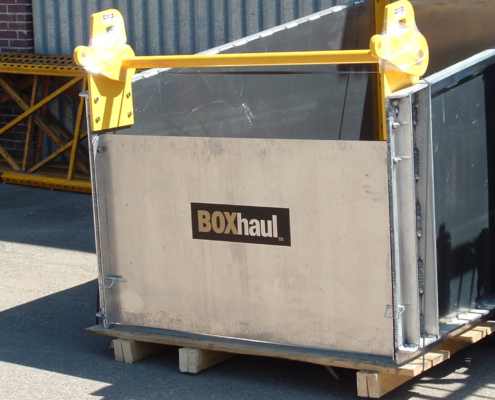
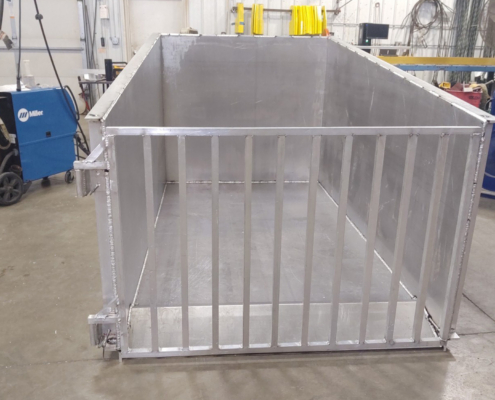
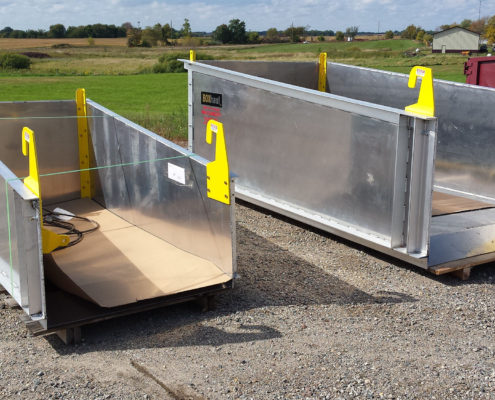
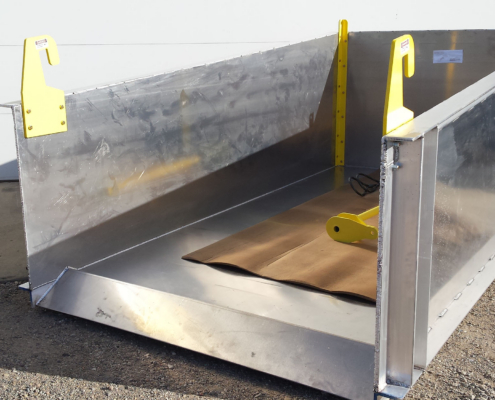
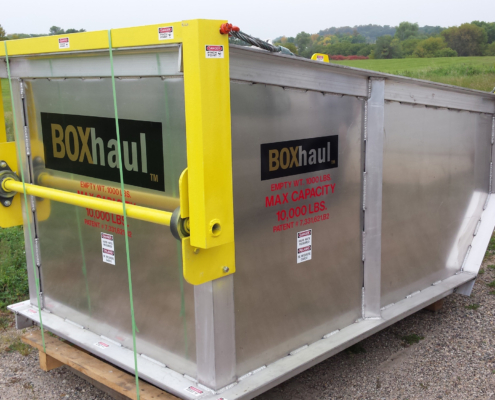
Staging means the drop point is a single container, not a pile. Piles don’t get emptied, containers do. A clearly defined container also gives crews a mental cue: scrap goes here, not there.
Removal means the staging container gets emptied without disrupting work. If emptying requires shutting down the site or pulling crew off active framing, it won’t happen often enough. The removal step is where most teams fail, even when their intentions are good. Right-sized containment is what makes the framework actually work.